If you manage to create a community around your podcast, then your listeners will turn into fans and your show is likely to become self-sustaining.
You could argue that certain types of podcast don’t need or benefit from having a community but I’d say that if you nurture your listeners, there are huge benefits.
Here’s what happened to me (cutting a very long story short).
I started the Yes Music Podcast as a hobby to learn how to podcast and to share my love of the music of the world’s greatest progressive rock band. I released weekly episodes and I did a lot of the things I’ve described in previous emails, especially mentioning listeners by name every week and creating ways for them to get involved with the show.
Five years later, I launched a Patreon (subscription service for creatives) campaign and was amazed at the results. The listeners who saw themselves as part of the YMP community were keen to pay me a monthly subscription fee in return for a few ‘extras’ such as access to exclusive activities on the Patreon site.
I have always made it clear that the main purpose of the Patreon contributions is to help keep the podcast going – not to make a profit. Listener numbers have always been modest on this show but a surprising number of listeners have stayed signed-up to the Patreon group every since.
The Yes Music Podcast is now approaching 450 episodes and its ninth birthday. It certainly would not be still going if it wasn’t for the community which has developed around it. There are plenty more stories I could share about the past nine years of the show – so look out for those in future newsletters.
So, do please let me know if you think the 4 Cs will hep you to establish and/or grow your own podcast and I’ll be back soon with some different but hopefully useful podcasting goodness.
It’s part 3 of the Podcasting 4 Cs this time – Connection.
If you have come up with great content for your audience and are communicating effectively with them, then connection is practically guaranteed.
Audio is a highly personal and even intimate medium which builds strong bonds between you and your listeners. You can strengthen this connection by following these tips:
Release your episodes on a consistent basis
– another C word! Humans love routine. There’s a reason why radio and TV originally had set schedules – to create routines for their audience so the programme became part of a dependable schedule. People used to look forward to their favourite programme airing on a Thursday night at 9pm and they built it into their life. There’s a lot of truth in the expression ‘appointment to view television’ or ‘appointment to listen’, in podcasters’ terms. Even though TV schedules have been disrupted by the appearance of on-demand services, people still tune in to see the news and other topical content at set times. You will find that your listeners build your releases into their schedule and contact you if an episode is late!
Come up with a set pattern for the content in your episodes.
This can be varied, of course, and will undoubtedly change over time but your audience will be happier to turn up consistently if they know what to expect. If your episodes are completely random, your audience’s desire for familiarity may be unfulfilled, leading to less connection.
Mention listeners by name.
I mentioned this last time in the communication tips. It’s just as important in strengthening connection as well. Think about how you can deepen connections by remembering and mentioning your listeners’ birthdays or other important aspects of their life – without being creepy and being mindful of privacy, of course! Mention their tweets and thank them for listening or contributing.
Create special activities and events for your audience.
Invite listeners to participate in competitions (being mindful of the competition laws in your country), giveaways or special online or offline events. Set up a private Facebook group, host live events, create exclusive merchandise – the list is endless. The important thing is to make your audience feel special for listening.
Put a little thought into how to strengthen connection and you’ll be amazed at your listeners’ reaction – and they will tell their friends as well!
This time, we are moving on to the second of the Podcasting 4 Cs – Communication.
This may seem a bit counter-intuitive. After all, a podcast is by definition a form of communication. However, it’s essential to consider how you are communicating with your listeners. If you get it right, this will naturally lead on to the next C – Connection. (You may like to read or re-read my blog post ‘Why Terry Wogan holds the key to your business’ or organisation’s success‘ which talks about communication leading to connection.)
People have written courses and whole books about effective communication and how to achieve it but here are just a few pointers for podcasters:
Avoid using phrases like ‘all you guys out there’ – podcasting is an intimate medium and most of your audience will be listening alone. Your communication will be much more effective if you use pronouns such as ‘you’. Speak as if you are talking directly to a friend, not to a general mass of people at an event.
Try using an avatar – some podcasters actually print out a photo of their ‘ideal listener’ and set it up in front of their microphone to make sure they remember they are talking to a single person, and in an appropriate way.
Mention listeners by name – everyone loves hearing their name in a podcast episode. However many times you mention someone, it’s probably not enough. Try to include thanks for some feedback, mention a tweet or update they posted or an email they sent. You’ll be amazed how excited listeners will get when they hear their name – and they’re much more likely to tell their friends about your podcast as a result!
Try to avoid exclusive chatter – for some listeners, this will be the first time they have heard your show. Put yourself in their shoes – would ‘in-jokes’ enhance communication or hinder it? If your new listener doesn’t understand what you are saying or why you are saying it, they are much more likely to press stop and unsubscribe. Familiarity with the ways in which you talk about things in your podcast is a great way of encouraging listeners to become fans because they will feel part of the group but just be mindful that you risk putting new listeners off.
These are just a few of my thoughts on communication. Let me know if you have come across other barriers to or enhancers of effective communication in your podcast by pressing reply to this email
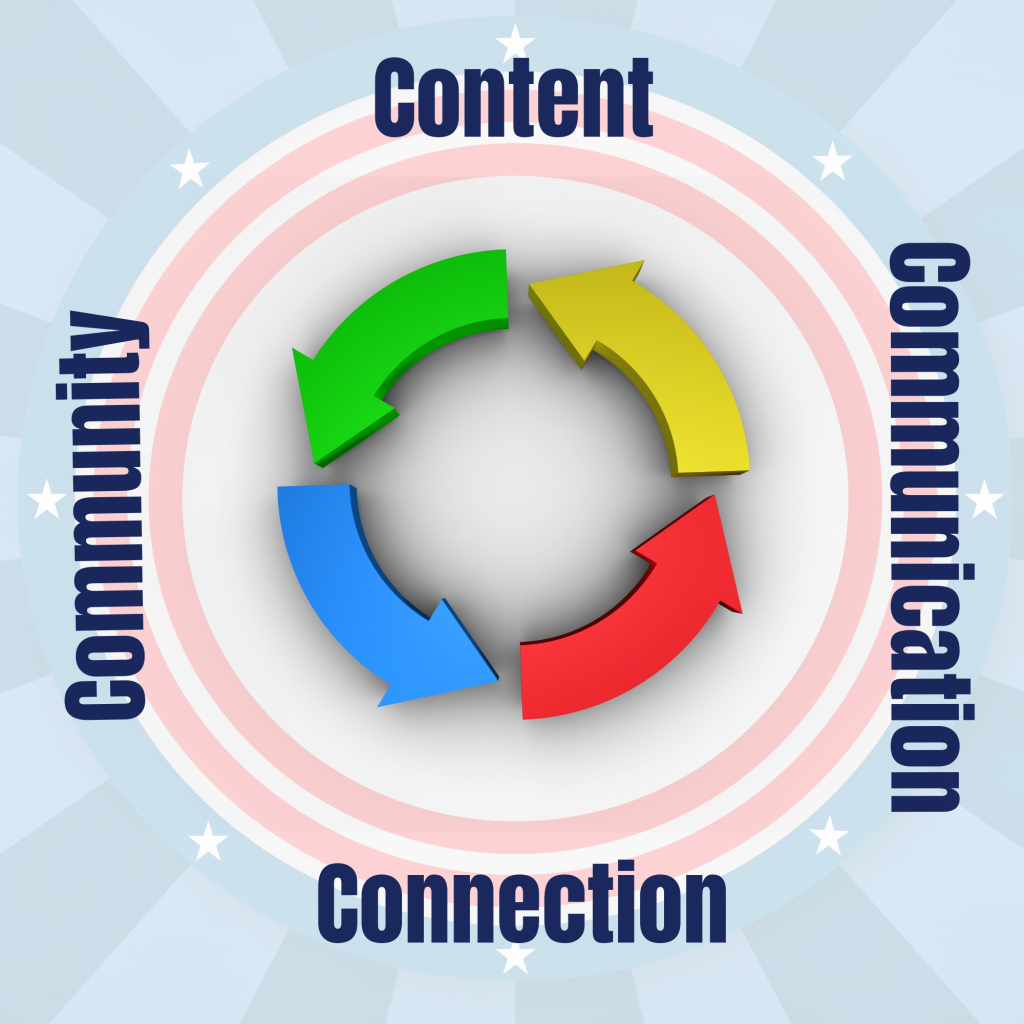
I’d like to share a little bit about my Podcasting 4 Cs:
Over the past 12 years of podcast production, I’ve found that keeping these 4 concepts in mind is the best way to create a dynamic show which meets the needs of your audience.
In this post, I’m going to talk about the first of the 4 Cs – Content.
Obviously, you can’t have a podcast without content but it’s got to be content which means something to your prospective listeners, which strikes a chord, which moves them in some way.
The only reason anyone subscribes to a podcast is because it solves a problem for them. This doesn’t have to be a business or personal problem – it can just as easily be the problem of being bored and craving something interesting, funny or otherwise engaging to listen to.
If you and your listeners are all fanatical about a sports club, science fiction books or knitting, the problem you’ll be solving for them could be providing the latest news, discussing minute details or simply enthusing about your favourite topic.
Don’t worry if you think your subject is already being covered by one or more other shows. Imagine if Channel 4 in the UK had abandoned plans for a news show because the BBC and ITV were already doing news. What did they do instead? They worked out how they could put their own, unique spin on the news. They scheduled their shows at a different time to the other channels and they ended up attracting a different audience – or maybe even the same audience looking for a different slant on the day’s events.
Often, it’s just your own personality which can make the difference. You won’t present ideas or commentary in the same way as anyone else so don’t be afraid to cover popular topics. Find your own angle and you’ll automatically appeal to a niche of listeners. It’s far more powerful to talk to a small niche who love your message than a huge, general audience who won’t give a second thought to unsubscribing.
So, when you are planning content for your podcast, whether you are at the start of your podcasting journey or many episodes in, ask yourself questions like:
“What do my audience want to hear about?”
“What common problems do my audience have and how can I help to solve them?”
“What can my show offer that no others can?”
After all, your podcast isn’t really about you, it’s all about your audience. Without anyone listening, you might as well keep your audio files on your own computer.
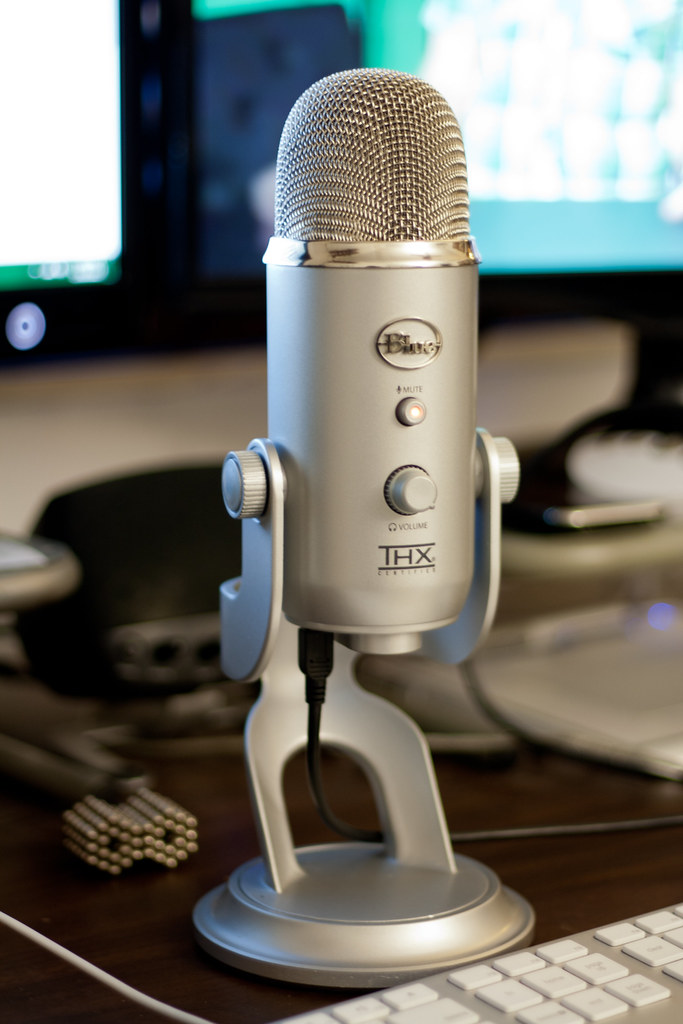
It seems that the default podcasting microphone at the moment is the Blue Yeti. I’m really not sure where this received wisdom comes from and I suggest that it hasn’t come from people who know a great deal about podcasting from home. [Stands back for deluge of contrary opinions.]
Please don’t misunderstand me – the Blue Yeti is a great-sounding mic and it looks amazing but it’s a condenser which means it’s very sensitive and can be hard to use in a home recording situation.
My comments below actually apply to a wide variety of different condenser microphones, not just the Blue Yeti but every time I speak to a prospective podcaster, they seem to think the Yeti is the ‘only’ choice.
I recently edited audio from a Blue Yeti user. I could hear background noise very clearly – breathing, rustling clothes, people moving about in the background and even, to my amazement, the ticking of the speaker’s wrist watch!
Here are the problems:
You need to get your mouth close to the Yeti to avoid picking up too much background noise and then your ‘P’s and ‘D’s ‘pop’ much more easily (popping means blasting air into the microphone). This makes you sound less professional, despite having spent a lot of money on the mic. So you need a pop filter and the best one to use is Blue’s own which is pricey.
It can also be rather tricky to get the Yeti into a comfortable position for recording. It’s a side-address microphone (you might be surprised how many people don’t realise that) and it’s very heavy indeed. It has a stand but it’s not fully adjustable so if the height doesn’t suit how you want to place it, you’ll need another stand. The best are angle-poise, boom-arm stands. The weight of the Yeti means you’ll need a heavy-duty boom arm and the best is, again, Blue’s own one – and again, it’s pricey.
The Yeti is a USB microphone, which is great because it’s plug and play on pretty much every computer in existence. However, if you ever wanted to upgrade to using a sound mixer for your podcast recordings or use the mic with professional audio equipment, you will have problems. The professional XLR connection-type isn’t compatible with USB unless you buy other conversion kit. This means that you might need to purchase a different microphone later on in your podcasting journey.
Blue Yeti’s secret polar pattern settings
Another trick many people miss is that the Yeti has a special switch which changes it between:
Cardioid
Bidirectional
Omnidirectional and
Stereo
If you are scratching your head about what these might mean, I don’t blame you! Omni and Bidirectional are fairly easy to guess – Omni means it will pick up sound from all around it and Bi means it will pick up sound mainly from its front and back.
However, what’s the difference between Bidirectional and Stereo? Well, I’ll let you into a secret – I don’t really know and I don’t really care. That’s because I know what you do need to set it to in order to create great audio for your podcast – the only remaining one on the list – Cardioid. This means the microphone concentrates on picking up just the sound that is directly in front of it and it tries to ignore everything else.
Why is this a good thing?
Think about it for a moment. If you have lots of background noise (called noise floor) you want your microphone to pick up mainly your voice and not let lots of other noise in. Unless you have a specially-treated room to record in, Cardiod is the one to choose and here’s the Yeti magic selector.
I have a client who uses her Blue Yeti brilliantly. It gives her excellent sound with minimal background noise. She records in a quiet room, knows how to adjust the settings and uses great mic technique – so it ISpossible.
Blue Yeti Pros and Cons
I was recently asked to set out the advantages and disadvantages of the Blue Yeti for home podcasting. This is an edited version of what I came up with, as a summary of the points above:
Pros
Cons
Great-sounding microphone if you know how to use it.
Condenser microphone rather than a dynamic microphone – you need a pop filter and the best one to use is Blue’s own, which is pricey.
Looks amazing – beautiful design of microphone and stand.
Difficult to place in the best position for recording – its stand is not adjustable so you’ll need another one. The best is Blue’s own one – and again it’s pricey.
A variety of polar pattern settings – it’s a very flexible mic for lots of different situations.
A variety of polar pattern settings – you need to know which one to use for what situation and arrange people accordingly.
USB microphone – simple to set up and go!
USB microphone – if you ever wanted to upgrade to a sound mixer or use the Yeti with professional audio equipment you will have problems. Other kit may well use the professional XLR connection-type.
Blue Yeti Pros and Cons
So what mic do you recommend instead for home podcasting?
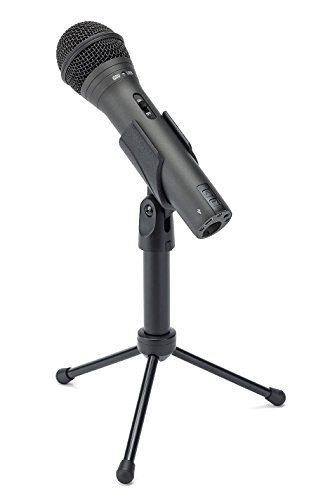
The Samson Q2U
Although it doesn’t look anything like as good as the Blue Yeti, the Samson Q2U is a great microphone which suits podcasting brilliantly. Many seasoned veterans use this microphone which can adapt to your changing needs much better than the Yeti.
Comparing the Yeti to the Q2U, here are some advantages of the less glamorous mic:
It’s cheaper
It’s dynamic so it typically doesn’t pick up as much background noise
It doesn’t need another stand (although the one which comes with it isn’t fantastic)
It has both USB and professional XLR connections so you can use it in a variety of recording set-ups and you don’t need to buy a new microphone as you develop
It doesn’t have the complexity of changing polar pattern settings
It sounds great
In my experience you need to be careful of the USB connection on the mic because it can be a bit fragile but on the whole, it’s a fantastic microphone.
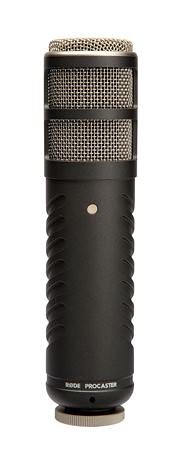
If you have a bit more money to splash out, I’d also recommend the Rode Podcaster which is a fabulous microphone and seems to be easy to get a great sound out of. It’s not my first choice because of its cost and the fact that it’s a USB mic but it’s a very good choice apart from that.
This is actually the Rode Procaster which has an XLR input but the USB Podcaster is pretty much the same apart from being white.
Overall
So, if you can get a Blue Yeti or any other condenser microphone to work for you, that’s great – your podcast will sound really good. However, if you have a bit of noise around where you record and you can’t retreat to a walk-in wardrobe, I’d go for a Samson Q2U. It will sound professional and you can keep it throughout your podcasting journey.
Are you feeling overwhelmed by the amount of work podcasting takes? What can you do to reduce the time commitment?
Read on to find out…
There are lots of ways to claw back your time and I’ll talk about some others in future posts but one of the best ways to reduce your workload is to get someone else to do the editing and mastering of your episodes for you.
Unless you really enjoy editing (like I do), it can be a tedious chore and a time-waster for you.
Just think of the amount of time you could free up for creating more and better content or for getting on with your life or your business.
You can find podcast editors through basic web searching, or on ‘gig’ portals like fiverr.com or upwork.com but probably the most reliable way is to ask podcasters you know for referrals.
However, when you’ve found an editor, how do you know they are going to do a good job?
I asked this question on LinkedIn recently and here are some of the responses.
“If it was me I would like to know the practicalities involved eg how would I get the audio to you, what would the turnaround time be, what tech you would recommend using etc”
What Fay says is important because those seemingly simple practicalities can scupper the relationship you have with your editor. If you keep having to chase and clarify how to work together, you’ll never get anything done and It will be really frustrating.
“What was helpful for me when I hired you was that you were able to give me a list of shows you’ve already worked on, which meant I could get a sense of your editing style and genre. I wanted to know that you could produce the kind of shows I wanted to have myself. I also want to make sure I don’t hire someone who is running their first rodeo, so to speak 🙂 “
So, relevant experience and expertise are important to Karen. If your editor has never worked on podcasts before, then they are unlikely to know the specific challenges and requirements of the genre. They might be a brilliant audio engineer and experienced at editing and mixing music but that doesn’t necessarily transfer directly into podcast editing.
“The logistics and practicalities of working with you. Also whether you’re going to support me in getting the best results by providing feedback on how I could improve my end if needed.”
Another vote for the practicalities from Helen but she also stresses the need for partnership. Do you want your editor just to deal with the MP3 files or would it be better if they used their experience of podcasting to help you improve your show – technically and in format or ‘treatment’?
So, before you agree to pay an editor any money, it’s best to ask some critical questions…and then look carefully at their answers. In legal circles, this is called ‘Due Diligence’ – you’ll want to make sure you’re going to choose the right partner for your show.
You can take inspiration from the insights above which are all very sensible indeed but I’ve also put together some suggested questions for you below which might help you to find out whether the editor you are speaking to ‘knows their onions,’ technically and is able to provide a sustainable service.
Feel free to use the questions in your own Due Diligence – I hope they help!
Attributes to look for in a podcast editor
Your podcast editor:
has their own podcast
has several years’ experience in editing podcasts
has experience of producing similar kinds of shows to yours
is able to turn round episodes in a few days at most
is keen to work with you to improve your show, not just do the editing
Audio file requirements
Whether or not you are used to the deep technicalities of podcast files yourself, it’s really important to make sure your editor knows how to optimise your MP3s. Otherwise you can waste space on your media host (and therefore money!) or store up problems for yourself in the future.
Don’t worry if you don’t fully understand the terminology etc. – you should only worry if your editor doesn’t understand them!
Question: What kind of audio files should I send you?
Your editor should understand the concepts of working from the highest quality source files. WAV (and some other) files are ‘lossless’ which means that, however you edit them, the quality should remain as good as the original recording. If you edit ‘lossy’ files like MP3s, each time you save a version, the quality will decrease.
What to look for in an answer:
Great – Always send me WAV – I only edit in lossless format
Fine – You can send me WAV, AIFF or FLAC
Not great – Send me high quality MP3 (>=128Kbps)
Get worried – Send me low quality MP3 (<96Kbps)
Question: What Kbps would you master my MP3s in and would you recommend Stereo or Mono?
This is really important. The Kbps of your final MP3 files (after ‘mastering’) indicates the quality of the sound you will get. Choose too high a rate and you will waste space (and therefore potentially money) in your media hosting account. Choosing too low a rate for the kind of audio you produce will mean disappointing quality.
If you are producing a podcast which is mainly dialogue, you don’t need a stereo MP3 unless the music you do have is really important to you. Neither do you need to have a particularly high Kbps. The BBC used to produce their spoken word podcasts (before things changed with BBC Sounds) at 64Kbps mono. So if your editor recommends 128Kbps stereo for your mainly-talk show, you would be right to be a bit concerned.
Audible insist on 192Kbps for audiobooks but if you listen to the same file at 192Kbps and 96Kbps you’d be hard pressed to notice a great deal of difference.
If you have a lot of stereo music to share in your episodes, then you might want to master your MP3s in stereo but it will take up a lot more room on your media host.
I master my own MP3s and those of my clients at 96Kbps mono but that’s not the only way it can be done acceptably.
What to look for in an answer:
Great – What kind of show you are doing? I tailor my mastering to suit
Fine – I just master at 96Kbps and mono if the show is mainly dialogue
Not great – I always uses the same, high Kbps but in mono for dialogue shows
Get worried – I always master at 196Kbps stereo, regardless of the type of show
Case study
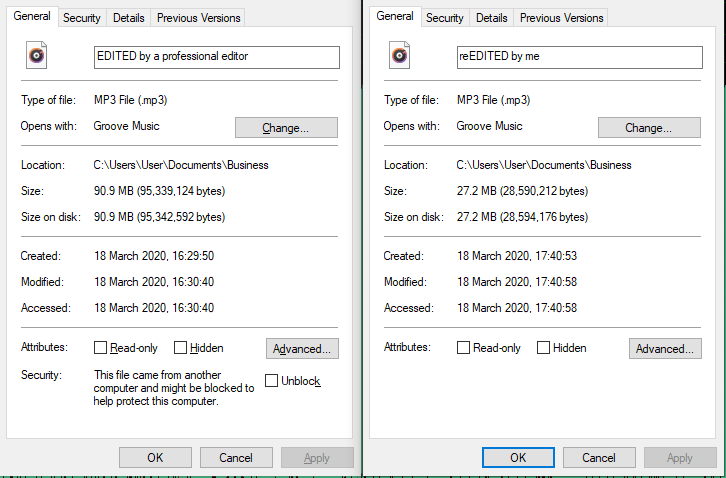
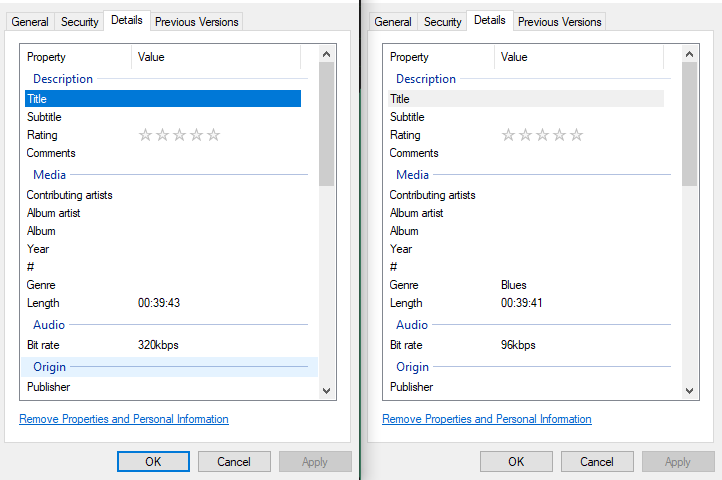
I downloaded the latest episode from a high-profile podcast which I know is edited by a ‘professional’. Then I re-mastered the audio. Here’s what happened:
Look at the size of the files. Before my re-master, it’s 90.9 MB. Afterwards, it’s 27.2 MB.
And here’s the reason – the original is mastered at 320kbps. I re-mastered the file at 96kbps and changed it from stereo to mono. I promise you, I can’t tell the difference in audio quality.
Question: What should I do about LUFS (or LKFS) loudness standards?
Now, this is a critical question and will definitely help you to gauge whether your editor knows the podcasting domain. LUFS (or LKFS) is the unit of measurement used for ‘loudness’. Radio, TV and now podcasts use a standard ‘loudness’ so that when you go from programme to programme, show to show, episode to episode you don’t have to alter the volume of your device.
It can be inconvenient to have to ‘ride the volume knob’ and maybe even dangerous if it distracts you from driving, for example.
[Actually the podcasting ‘standard’ is only an industry best practice at the moment but you’ll want to use best practices in your show won’t you?]
So your editor should know about LUFS and be able to reassure you that they take notice of the standard when they master your MP3s.
It does get a bit confusing and technical but basically the podcasting standard (which is different to radio and TV) is -16LUFS. If an editor quotes -19LUFS for mono, that’s okay as well.
What to look for in an answer:
Great – I master to -16 LUFS (or -19 LUFS for mono and -16LUFS for stereo)
Fine – I master to -16 LUFS
Not great – I master to -19 LUFS only, whether the file is mono or stereo
Get worried – What are LUFS?
Question: Will you add ID3 tags for me?
ID3 tags contain data about your MP3 file, also known as ‘metadata’ which is embedded into your MP3. If you’ve ever used the desktop iTunes software or listened to a podcast episode in your car through Bluetooth, you will have seen ID3 tags. The title of the song, the author, the album etc. are all included via ID3 tags.
Examples of podcast data held in ID3 tags could include:
your episode image (as opposed to your show cover art)
the title of your episode
the episode number
your show notes
your name as author of the episode
You don’t have to use any ID3 tags at all in your MP3s but the vast majority of shows do. Also, Apple specify certain tags so you wouldn’t want to ignore the requirements of the largest podcast distribution platform of all.
Different podcast apps use your ID3 tags in different ways and as long as you have a reputable media host, you will be able to add your ID3 tags when you upload the MP3 file. However, they can also be added using 3rd party software before you upload.
What to look for in an answer:
Great – I’ll add whatever ID3 tags you like and definitely the ones Apple and other apps require
Fine – I’ll add some basic ID3 tags when I upload to your media host
Not great – I’m not sure ID3 tags are needed any more
Get worried – What are ID3 tags?
Case Study
I looked at the ID3 tags of the same MP3 file I mentioned above. Or rather, I tried to. There weren’t any.
General questions
Question: How long will it take?
Podcast editing is serious work – it’s detailed, intensive and time-consuming. You can’t do anything else at the same time and you need experience, otherwise it can take even longer and be exhausting.
So you need to give your editor as much time as possible. Obviously, if you pile on the time pressure, mistakes are more likely.
A rule of thumb for podcast production is ‘4-1’. Every one minute of finished audio takes about 4 minutes to produce. So a 20-minute episode takes about 80 minutes to create. This could include more than just the editing but even a very experienced editor might only be able to work at 2-1, assuming the raw recordings are decent and the editing isn’t too complex.
What to look for in an answer:
Great – I’ll normally get the completed MP3 file back to you in around 2-3 days but I can turn things around more quickly if you really need it
Fine – It’ll usually take me about 3 days from receiving your raw files
Not great – I work on a weekly turnaround
Get worried – I’m not sure, I’ll let you know
Question: What do you edit?
Podcast editing can be like the proverbial piece of string – it can go on indefinitely.
What to look for in an answer:
However, a reasonable set of expectations might include the following (some only if they are necessary):
Noise reduction
Removal of plosives (loud, explosive ‘p’s and ‘b’s etc.)
Insertion of intro and outro music/voiceover
Volume levelling
Compression (making everything sound loud enough)
De-ess (toning down of loud ‘s’ sounds)
Mastering the MP3 file to the standards mentioned above
Question: How much will it cost?
The million dollar question (hopefully not!) In a lot of ways, you will get what you pay for in podcast editing. If you engage someone with little experience and expertise on a ‘gig’ platform, you can’t really complain about the service level and quality of the work.
Professional, experienced editors will cost you a little more but you are much more likely to be delighted with the results.
What to look for in an answer:
A well-respected podcast editing company has these costs on their website:
Up to 20 Minutes – £29.99
Up to 40 Minutes – £39.99
Up to 60 Minutes – £59.99
You can also purchase bundles of episodes which works out to be cheaper than individual episodes.
If the rates you are quoted are very different to these, you should ask why – there may be legitimate reasons.
Whether you know who the late broadcaster Terry Wogan was or
you’ve never heard his name until now, the title of this post may surprise you.
Wogan was something of a British national treasure, despite being of Irish heritage. His broadcasting career spanned several decades and many would say it peaked when he hosted a prime-time chat show on BBC1, Wednesdays to Fridays at 7pm, which attracted millions of viewers. Imagine that exposure – every time you turned on the television, there he would be.
Sir Terry also hosted the hugely successful annual live telethon, Children in Need but, believe it or not, all this television work was not where he was most successful in one, crucial respect:
It was on his radio show that he made his greatest impact in terms of the connections he made and the loyalty he built up with his audience.
Before his retirement in 2009, his BBC Radio 2 breakfast show was listened to by 8 million people every day and he was the most successful radio broadcaster in Europe.
So how was he able to build a stronger relationship with his audience on the radio than on television and what does this have to do with your business or organisation? Read on to find out…
In common with other talented radio presenters, Wogan was able to use the far more intimate medium of radio to establish and strengthen his connections with those who listened. Audio strips away the distractions of visual elements. It seems like the host is speaking directly to the listener who concentrates just on the voice and soon feels like he/she knows and trusts the presenter.
Sir Terry understood this and developed his style to make sure all who tuned in felt like part of his virtual family. He encouraged listeners to write into the show and his community grew – with listeners becoming fans. They gave themselves humorous nicknames which Wogan used as he read out their comments – which were almost always comic.
Listeners who didn’t get involved with the show directly soon got to know the names and writing styles of the regular correspondents and so felt like they were also part of the community.
This led to the creation of what I call ‘repeat attenders’ – millions of people who turned out and tuned in again and again to listen to Terry’s show because they knew they would be entertained by his kind, Irish humour but much more importantly because they felt a deep connection to him, his show and the community of listeners which they believed they themselves were an important part of .
So think about your customers, prospective customers or members for a moment. What if you were able to create, deepen and sustain the kind of connections that Terry Wogan had with his audience? Do you think that would help in retaining and enriching the experience of your audience?
But hold on, you can’t just start a radio show can you?
Well, nowadays you can, for only a small investment of time and money – it’s called (as you may already know) a podcast and the beauty of this (relatively) new medium is that it’s on-demand and digital, so it’s free from the constraints of time, place and access.
[Also, platforms like radio.co now make it easy to set up and run your own online radio.]
More and more people are discovering podcasts across the world, and, given the right training and support, you can reap the same benefits Terry Wogan did.
Are you satisfied with the number of people you have in your online audience? Are you always looking for more?
The key to gaining a larger audience is CONNECTION.
You may agree but how can you create more powerful connections and what’s it got to do with what’s in your pocket?
Read on and find out.
We live in a media-rich world. Some might even call it media-infested but it’s undeniable that everyone is connected in some way almost all the time via technological devices – and what’s the one device which is always to hand, in our pockets? The mobile phone.
However, we are also very busy. While our children spend hours each day (if we let them) watching YouTube and scrolling through Instagram posts, adults have less and less ‘screen-time’ because we are doing more tasks and activities where screens would be dangerous or inappropriate.
Have you tried watching YouTube while driving? Don’t.
Here’s what Podcasting Guru, Dr. Colin Gray has to say about the remarkable growth of the medium:
“Podcasting has always been a medium of slow and steady wins the race, and that includes its own growth. But, since 2015, growth has been accelerating, and this past year has seen an explosion of celebrities, platforms and, most telling, venture funding, flooding to the medium. The draw is the audience – smaller than YouTube or social media, sure, but more engaged than both combined, and multiplied by 100. Listeners are discerning, evangelic and they take action! Podcast adverts convert like no other. Branded podcasts are on the rise, and the brands are benefiting by the bucket load. At the end of the day, if you’re looking for a way to create content for the web that creates huge fans of your brand, and moves the sales dial, then a podcast is for you.” Dr. Colin Gray, The Podcast Host, originator of Alitu – The Quick & Easy way to Make your Podcast (which is brilliant by the way and that’s my affiliate link!)
It’s a little known fact that there are podcasts about almost every conceivable topic. If you don’t believe me, just try this little Google hack:
>>> Start typing ‘podcast about’ and then try every letter of the alphabet in turn. You’ll find some fascinating shows! Fancy listening to a podcast about quantum physics? What about a show about Watergate or Japan? These results pop up automatically – you don’t even need to press search. <<<
So, more people are listening to podcasts on the device they have with them at all times – but how can you use this to your advantage? How can you attract more members via a podcast?
Well, we are back to CONNECTION.
Think about how podcasts work. The vast majority of the time, podcasts are listened to by individuals. The sound of the host’s voice – and, of course, the host’s message goes directly into the ears of that one individual. It makes podcasting a surprisingly intimate medium and one which enables strong connections to be built between the listener and the host.
A well-constructed podcast can help you to engage, attract and retain more members for your membership organisation, especially if you have considered the needs and desires of your audience and produce useful, consistent episodes.
It may surprise you to learn that podcast listeners build your show into their schedule and quickly grow to expect it to be there. Just like the (now old-fashioned) practice of releasing episodes of a favourite TV show at a predictable weekly time, your audience will be disappointed if they haven’t got your show to listen to when they clamber into their car at the end of a tiring Thursday (or whatever day you have chosen).
The host of the podcast becomes like a friend and if a listener ever has their name mentioned on a show, the effect is astonishing!
If the listener is already one of your members, their knowledge of and interest in your activities is strengthened and if they haven’t yet joined, the ever-growing connection you are nurturing will be the most persuasive form of audience recruitment you have at your disposal.
Why not drop me a line and we can discuss how you can start connecting more deeply with your audience via podcasting and audiobooks or sign up for my newsletter and I’ll send you all sorts of interesting podcast-related things!
I’ve been enjoying creating video for LinkedIn. This time I mess about while showing you how to manage your noise floor – what it is, why it’s important and how to minimise it.
Here’s the post:
An easy way to get better audio for your podcast is to make sure your voice is much louder than the noise in your recording room. Here are three ways to decrease your NOISE FLOOR…
https://www.youtube.com/watch?v=cG7U57yEyvg
What do you think? Leave a comment below!
This website uses cookies to improve your experience. We'll assume you accept this policy as long as you are using this websiteAcceptView Policy